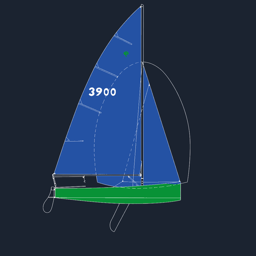
 Thistlebase
Technical tip for rigging: A short length of quarter-inch diameter spring steel attached to the spinnaker topping lift bridle and fastened to the mast prevents the spinnaker from riding too high.
Sail Trim & Downwind Technique
Spinnaker Handling & Technique
Instructional articles on rigging, setting, trimming, and handling spinnakers along with related equipment tips.
46 articles · 1946–2026
Charlie Williams earned the nickname 'Mark Snapper' after overcompensating in mark rounding at Racine, bringing humor to the racing community. The story details incidents where Williams strayed from the mark while attempting to improve his line.
Mr. Knapp presents practical sailing tips covering spinnaker pole positioning, boom vang usage, smooth bottom design, and miscellaneous racing techniques. He emphasizes adhering to the one-design principle and proper sail trim for competitive racing.
Ron Small proposes an amendment to the Thistle by-laws requiring spinnaker numbers to be displayed on both sides of the sail in easily distinguishable contrasting colors. He advocates for this change to aid race committee identification during competition.
The Executive Committee authorizes displaying racing numbers on spinnakers to aid in recording finishes and improve safety in races with multiple boats, following standards set by yachting associations.
Article addresses a rules question from Ray Sieple about using two jibs on spinnaker runs. Chief Measurer George Devlin ruled against it. Ironically, Devlin himself won his national qualifying regatta without using a spinnaker.
Notice that two sailors are seeking spinnakers for their Thistle boats.
Atlanta sailors Jack Beachem, Jack O'Shea, and Bundy Williamson have developed an innovative new spinnaker technique that departs from traditional methods, lowering the spinnaker forward rather than to the port side.
A detailed instructional article about setting and managing spinnakers in Thistle boats. Covers when to set the spinnaker, how to properly trim and handle it in different wind conditions, techniques for jibing, and practical advice from experienced skippers.
Extended editorial column featuring letters and discussions from class members on spinnaker developments, especially the new Roller Wider Spinnaker innovation. Covers technical debates about sail designs, equipment standards, and the ongoing discussion among fleet participants about class regulations and competitive practices.
Technical article discussing the design and performance characteristics of the innovative Roller Wider Spinnaker, including its construction methodology, how it differs from conventional spinakers, and its advantages in reaching conditions.
News item about the Roller Wider Spinnaker, a new development by Captain Arthur E. Were of Red Dragon Fleet #54 that promises to improve performance on reaches and provide better control compared to conventional full-cut jibs of the spinnaker on Thistles.
Fascinating technical feature describing the revolutionary two-blocked spinnaker launching method developed by Skipper Sinny Sinclair and his crew involving a new halyard system with creative pulley mechanics.
A discussion of spinnaker sailing challenges and practical advice from expert Harry Sindle. The article addresses common issues with spinnaker handling and calls for additional technical guidance on the topic.
Art Were writes to BAGPIPE noting a variance in the height of spinnaker pole fittings above the mast step. A random check of 14 boats at the Nationals showed heights ranging from 29½" to 44½" with an average of 36", with some boats carrying a second fitting for light air sailing.
Art Were solicits expert opinions about variance in spinnaker pole fittings height and proposes solutions for standardization in light-air sailing.
A new sailing book by Stuart Walker provides detailed guidance on spinnaker handling and small boat racing techniques. The book contains practical advice for improving spinnaker skills through various weather conditions and maneuvers.
Detailed technical guide to spinnaker handling, covering definition, rigging, setting, trimming, and jibing. The article emphasizes proper preparation at the dock and includes practical techniques for managing the spinnaker crew member's tasks.
Detailed technical article on spinnaker handling, including definition, rigging, setting, and trimming procedures for effective spinnaker management on a Thistle sailboat.
Fleet 21 of Leatherilps Yacht Club has proposed changes to spinnaker specifications to make installation easier and block exterior placement to the mast. The proposal aims to improve performance and reduce fouling, providing more insurance and better handling for competitive sailing.
Report on proposed rule changes by Fleet 21 regarding spinnaker specifications to allow modifications for ease of installation and halyard/block positioning relative to the mast.
Technical article discussing spinnaker equipment and other sailing gear modifications for Thistles. Covers spinnaker handling techniques, Lewmar self-bailers, various cleats and rigging configurations, and practical improvements for better boat handling and performance.
Technical letter explaining a customized spinnaker rigging system that allows single-crew operation. Describes how lines are routed to hand-held blocks for easier control and better sail shape.
A detailed explanation from Paul R. Hohler about the spinnaker rigging system used on his Thistle, including how the spinnaker lines are laid out and managed to allow for single-handed or two-person spinnaker handling with minimal crew movement.
Response to a letter from a reader asking about spinnaker rigging modifications for single-handed sailing. Provides practical advice on how to rig and control a spinnaker with minimal crew, including details about sheet runs and cleat configurations.
Note on sailing rules regarding spinaker halyard rigging. Comments on an innovation by Chief Measurer Dave Minton regarding spinaker halyard design and regulations.
Technical article describing the Clothesline Reel, a device for managing the spinnaker halyard at the centerboard trunk. Features an illustration of the mechanism and explains its function in simplifying boom vang setup.
Technical memo describing a new, simple spinnaker halyard fairlead design that was adopted at the Annual Meeting in August. Includes two detailed installation diagrams and instructions for proper setup.
Technical specifications and installation instructions for a new spinnaker halyard fairlead designed to be simpler and more convenient than previous designs. Includes detailed sketches showing the installation method and positioning of the fairlead on the mast.
Technical description of a new two-part pole lift system with spinnaker design improvements. Addresses the challenge of raising the pole when forestaying and explains how the innovative rig overcomes previous design problems through improved mechanics and trimming line arrangement.
A discussion of cleats and techniques for managing the spinnaker sheet on Thistle sailboats, including a solution found at the Nationals.
In-depth panel discussion among leading Thistle experts—Don Clark, Pete Barrett, Ed Fracker, Gene Wood, Lew Wake, and Marlin Abramson—on spinnaker design, selection, and handling techniques for various wind and sail conditions.
A detailed technical sailing article by Ed Fracker explaining the techniques for sailing a successful spinnaker reach. Covers setting the spinnaker, managing the boat during various wind conditions, jibing, and handling the final approach to the mark before a jibe or rounding.
Continuation of sailing technique articles covering spinnaker handling and the skippers' meeting discussion on safety and responsibilities of the skipper in avoiding accidents and maintaining proper procedures.
Comprehensive technical guide to spinnaker techniques, covering equipment selection, rigging, flying techniques, and handling in various wind conditions with detailed illustrations.
Detailed technical article on spinnaker handling and rigging for Thistle sailboats. Covers proper attachment, trim angle, and sailing techniques for optimal performance in various wind conditions.
Continuation of the spinnaker handling article covering techniques for maintaining spinnaker shape and managing the sail in various conditions.
Marketing letter from Murphy & Nye Sailmakers announcing their new sail designs for 1977, including mains, jibs, and spinnakers. Details product improvements and ordering information.
A technical article examining the design trade-offs involved in spinnaker construction and performance. Lindsay discusses various spinnaker shapes, materials, and configurations that balance ease-of-flying against performance, exploring options from full elliptical to flat designs.
A technical examination of spinnaker design tradeoffs including shape, construction methods, and fabric choices, with detailed analysis of how different design decisions affect sailing performance and handling characteristics.
A notice from the Chief Measurer warning Thistle sailors that 'twings' (spinnaker control devices) are illegal under Chief Measurer's Ruling #26. The article clarifies the regulation and advises sailors to consult TCA's rules before making modifications to their boats.
The third in a series on fundamentals, this article covers spinnaker setup, trim, and technique, emphasizing that mastering the spinnaker can significantly improve overall boat performance.
Third installment in a series on sailing basics, focusing on spinnaker use and technique. Covers setting and dousing procedures, trim considerations, crew weight distribution, and common trimming errors.
A detailed examination of whether Class rules should be modified to allow removing the spinnaker pole in certain tactical situations, considering both benefits and potential complications for fleet racing.
Patty Lawrence provides quick maintenance tips for blocks and block bearings, covering cleaning and care recommendations from Dan Rondeau at Harken for winterization.
A comprehensive technical article about symmetric spinnaker trimming and aerodynamics. Drawing on wind-tunnel research at Cornell University, Ingham explains how wind flows through spinnakers in reach mode versus run mode, and provides detailed guidance on pole angle, pole height, sail trim, heel angle, and steering techniques for both modes. The article includes Thistle-specific notes about the boat's light weight and large sail area.